
OUR MISSION

Dedicated to improving global well-being, the World Organization of Natural Medicine works to restore, promote, and provide access to Traditional Natural Medicine and essential humanitarian services. A key part of our mission is educating and empowering underserved populations to reach their full potential.
WHAT IS WONM?

The World Organization of Natural Medicine is an international, non-governmental organization (NGO)and humanitarian health organization that operates independently of political and religious affiliations. Established in accordance with the World Health Organization Alma Ata Declaration of 1978.WONM is accredited by the Sovereign Orthodox Order of Knight Hospitallers of St. John for its humanitarian efforts.

WONM Clinics For Humanity is a humanitarian initiative by the World Organization of Natural Medicine (WONM). These clinics aim to provide accessible healthcare services to underserved communities worldwide. Through a combination of traditional natural medicine practices and modern healthcare approaches, WONM Clinics For Humanity strives to improve the health and well-being of individuals who may not have regular access to traditional health care. This initiative reflects WONM's commitment to promoting self-care and addressing healthcare through education.

OUR IMPACT
80+
Humanitarian Missions
WONM - Clinics for Humanity has brought us to various communities in North and South America, Africa, and Asia.
22+
Years Serving communities
Clinics for Humanity was established in 2003 as the Humanitarian department of WONM to provide services to developing nations.
20+
Thousands of Lives Impacted
We have provided humanitarian services to thousands of underserved people in developing nations through sustainable development of human potential through education in self-care.
Humanitarian Health Doctoral and Fellowship Research
The research and fellowship programs are designed to strengthen the research department and are exclusive to organization members. WONM-UHM research department is a member of the United Nations Academic Impact.
Ambassadors
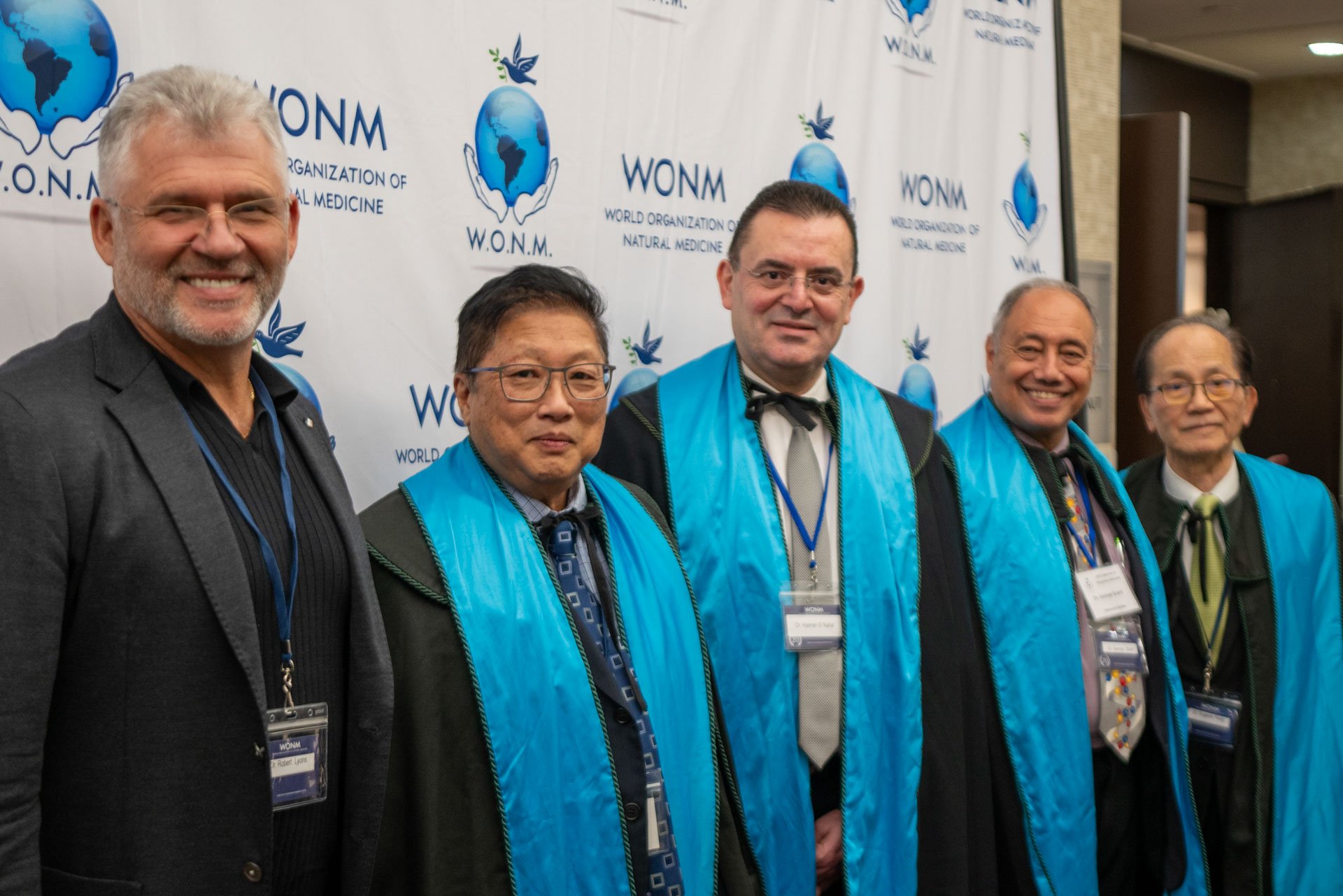
WONM Ambassadors
Our ambassadors are empowered to advance the mission and directives of the organization's president, focusing on:
Promoting collaboration with specialized agencies to enhance nutrition, sanitation, and environmental hygiene, along with humanitarian efforts such as education for underserved groups.
Facilitating cooperation among scientific and professional communities dedicated to promoting wellness and advancing peace-building initiatives.
Supporting initiatives related to spiritual well-being, particularly for those affected by discord in human relations.
Promoting and conducting research in the field of humanitarian health advancement.
Providing information, guidance, and assistance in original and indigenous healing systems.
Additionally, our ambassadors undertake all necessary actions to achieve the objectives outlined by the World Organization of Natural Medicine.
AFFILIATES & CERTIFYING ORGANIZATIONS:
Affiliated Organizations and subgroups of the World Organization of Natural Medicine; Board of Natural Medicine Doctors and Practitioners, Board of Integrative Medicine, University of Humanitarian Medicine Federation North American, Catholic Pontifical Educational Institutions-North America and Clinics for Humanity International(TM). 
